Equity-deserving groups are communities that may experience systemic barriers to accessing employment, opportunities, resources, development, advancement, and leadership.
Depending on the organization, sector, and community, these groups may include women, Indigenous Peoples, racialized people, persons with disabilities, 2SLGBTQIA+ people, newcomers, and others who have historically experienced barriers within the workplace.
The term recognizes that creating a diverse workforce is not simply about representation. It is also about identifying and addressing the policies, practices, processes, and workplace experiences that may unintentionally create barriers or unequal access to opportunity.
For employers, removing these barriers is also a business opportunity. It expands access to talent, helps organizations make better use of the skills and perspectives already within their workforce, and can strengthen engagement, retention, innovation, and productivity. By reducing avoidable turnover and improving the organization’s ability to attract, develop, and retain talent, more equitable workplace practices can contribute to greater operational stability and stronger financial performance.
Every stage of the employee experience – from job design and recruitment through onboarding, development, promotion, and recognition either expands or restricts access to talent. These are not neutral processes; they are active drivers of workforce composition and performance outcomes.
Employees are highly attuned to this distinction. They can tell when inclusion is embedded in systems and decision making versus when it exists only in policy or messaging. That gap between intent and lived experience has direct consequences for engagement, retention, and operational effectiveness.
Canadian research consistently demonstrates that more diverse organizations outperform their peers across key financial and operational metrics, including productivity, innovation capacity, and return on assets. In practical terms, inclusion is not a values statement, it is a performance lever in industries where talent scarcity is now a defining constraint.
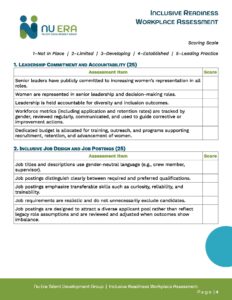 Nu Era Talent Development Group works with companies and organizations across the non-profit, corporate, and government sectors to turn your assessment results into practical action.